Transform Your Visuals with 3D Logistic Pack Illustrations
In the fast-paced world of digital marketing and web design, static images often fail to capture the complexity of modern supply chains. When you need to convey movement, efficiency, and global connectivity, flat graphics can feel insufficient. This is where the 3D Logistic Pack steps in. It is not just a collection of images; it is a comprehensive visual toolkit designed to bridge the gap between abstract concepts and tangible reality. For designers, entrepreneurs, and content creators, this pack offers a distinct visual language that speaks of precision and modernity.
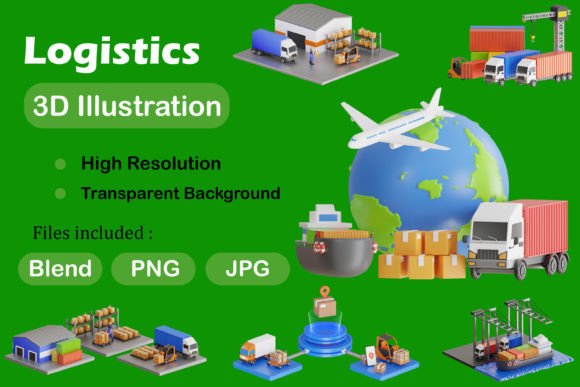
The visual character of this collection is defined by its sleek, isometric perspective and clean lines. It avoids the clutter often found in generic stock imagery, focusing instead on clarity and style. The illustrations typically feature stylized trucks, shipping containers, drones, and warehouse infrastructure, all rendered with a sense of depth that flat vector art cannot replicate. The "pack" aspect is crucial here—it provides a cohesive system where different elements share the same lighting conditions, color palette, and geometric ratios. This consistency allows you to build complex scenes without the assets looking like they were hastily assembled from different sources.
Why 3D Illustrations Are Essential for Modern Branding
Branding is no longer just about a logo; it is about the entire sensory experience a customer has with a company. When a business deals with logistics, e-commerce, or supply chain management, trust is the currency. The 3D Logistic Pack helps establish this trust through professional-grade visuals. The use of three-dimensional elements adds a layer of realism and weight to your projects. It suggests that your brand is established, capable, and forward-thinking. In a sea of two-dimensional competitors, the depth and texture of these illustrations naturally draw the eye, making your brand identity more memorable.
Consider the psychological impact on a user visiting a landing page. If they see a crisp, 3D illustration of a streamlined delivery process, they subconsciously associate that efficiency with your service. The style of these assets often leans towards a "low poly" or "clay render" aesthetic, which is currently trending in web design and UI/UX. It feels contemporary and tech-savvy without being overly complex. For small business owners in the shipping or freight industries, using these assets can instantly elevate a DIY website to look like it was built by a high-end agency.
Practical Applications Across Industries
The versatility of the 3D Logistic Pack extends far beyond simple website decoration. Because the pack includes various file formats—specifically 10 JPG files, 10 PNG files, and 10 Blender files—the application possibilities are nearly endless. The JPGs are ready for immediate use in presentations or blog posts. The PNGs, likely featuring transparent backgrounds, are perfect for layering over existing backgrounds in social media graphics or digital ads. However, the true power lies in the Blender files.
Having access to the native 3D source files is a game-changer for creative professionals. It means you are not just buying a picture; you are buying a customizable scene. You can adjust the camera angle, change the lighting to match your brand's specific color scheme, or even animate the objects for video content. Here are a few specific use cases:
- Editorial Design and Publishing: Use the illustrations in magazine layouts or annual reports to break up text-heavy sections. A 3D truck icon can serve as a perfect visual anchor for a section on "Distribution."
- Presentation Decks: Elevate a standard PowerPoint or Keynote deck. Instead of generic clip art, use high-quality 3D renders to explain complex supply chain workflows to stakeholders.
- App and UI Design: The PNGs can serve as distinct icons or onboarding illustrations for logistics apps, helping to guide users through the interface with friendly, recognizable imagery.
- Marketing Materials: Whether it is a digital banner ad or a physical poster for a trade show, these assets provide the high resolution needed for both screen and print.
Integrating 3D Assets into Your Design Workflow
One of the challenges with high-end design assets is integration. How do you make a shiny 3D object fit into a 2D layout without it looking jarring? The key is color grading and composition. The 3D Logistic Pack is designed to be adaptable. When using the assets, pay attention to the shadows and highlights. If your website has a light mode, the default lighting of the 3D models will likely work perfectly. For dark mode interfaces, you may need to tweak the contrast using the Blender files or a photo editing tool to ensure the details don't get lost in the background.
Furthermore, consider the concept of visual hierarchy. A 3D object naturally sits at the top of the hierarchy because it mimics real-world depth. Use this to your advantage. Place a 3D illustration of a drone or a package near your "Call to Action" button. The viewer's eye will be drawn to the 3D element first, and then naturally drift to the accompanying text or button. This technique can significantly improve click-through rates and user engagement.
For those working on logo design or iconography, while the pack isn't a font, the stylistic cues from the illustrations can influence your typography choices. If your visuals are rounded and geometric, pairing them with a geometric sans serif font creates harmony. If the logistics theme is more industrial and sharp, a sturdy serif font or a bold display font might be appropriate. The goal is to create a cohesive ecosystem where the imagery and the text feel like they belong to the same family.
Maximizing the Value of the Pack
To get the most out of this collection, think of it as a system rather than a gallery. The 3D Logistic Pack allows for storytelling. You can take a user on a journey from the warehouse to the truck to the customer's doorstep by using different assets from the same set. This consistency builds a narrative thread that keeps users engaged.
Here are a few final tips for utilizing these assets effectively:
- Customize the Blender Files: Don't settle for the default colors if they don't match your brand. Open the Blender files and learn basic material editing. Changing the color of a truck or a box is usually a simple process that makes the asset uniquely yours.
- Mix with Flat Elements: Sometimes, a fully 3D page can be overwhelming. Try mixing the 3D elements with flat vector shapes or solid color blocks. This contrast makes the 3D elements pop even more.
- Optimize for Web: While the JPGs and PNGs are likely optimized, always ensure your file sizes are appropriate for web loading speeds. Slow-loading 3D imagery can hurt your SEO and user experience.
Ultimately, the 3D Logistic Pack is about elevating the perception of your business. In an industry that deals with the tangible movement of goods, your visuals should reflect that solidity and reliability. Whether you are a blogger writing about supply chain trends, a marketer launching a new shipping service, or a designer building a corporate identity, this collection provides the tools to communicate your message with depth and clarity. It moves your projects from looking generic to looking bespoke, professional, and ready for the future of commerce.